AI has no taste.
You do.

Drop the references you love. keyline measures them into one direction any model can follow.

$29 once unlocks everything, forever. Not monthly, not per board, not per export.

A real recording of keyline, 2026-09-10: seven CC0 references dropped, the board composed by the engine, one reference pinned, the direction generated live. The half-minute read is cut to its start and end; nothing else is edited.

Everything keyline measures, compiles, and keeps.

No modules, no add-ons. Everything, from the first board.

Measured palette

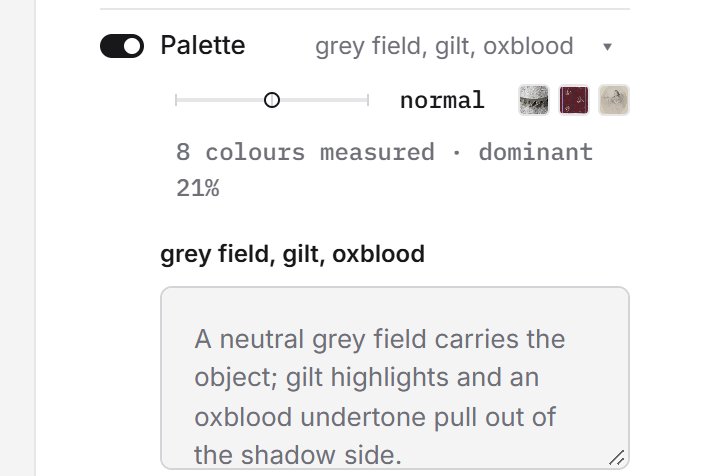
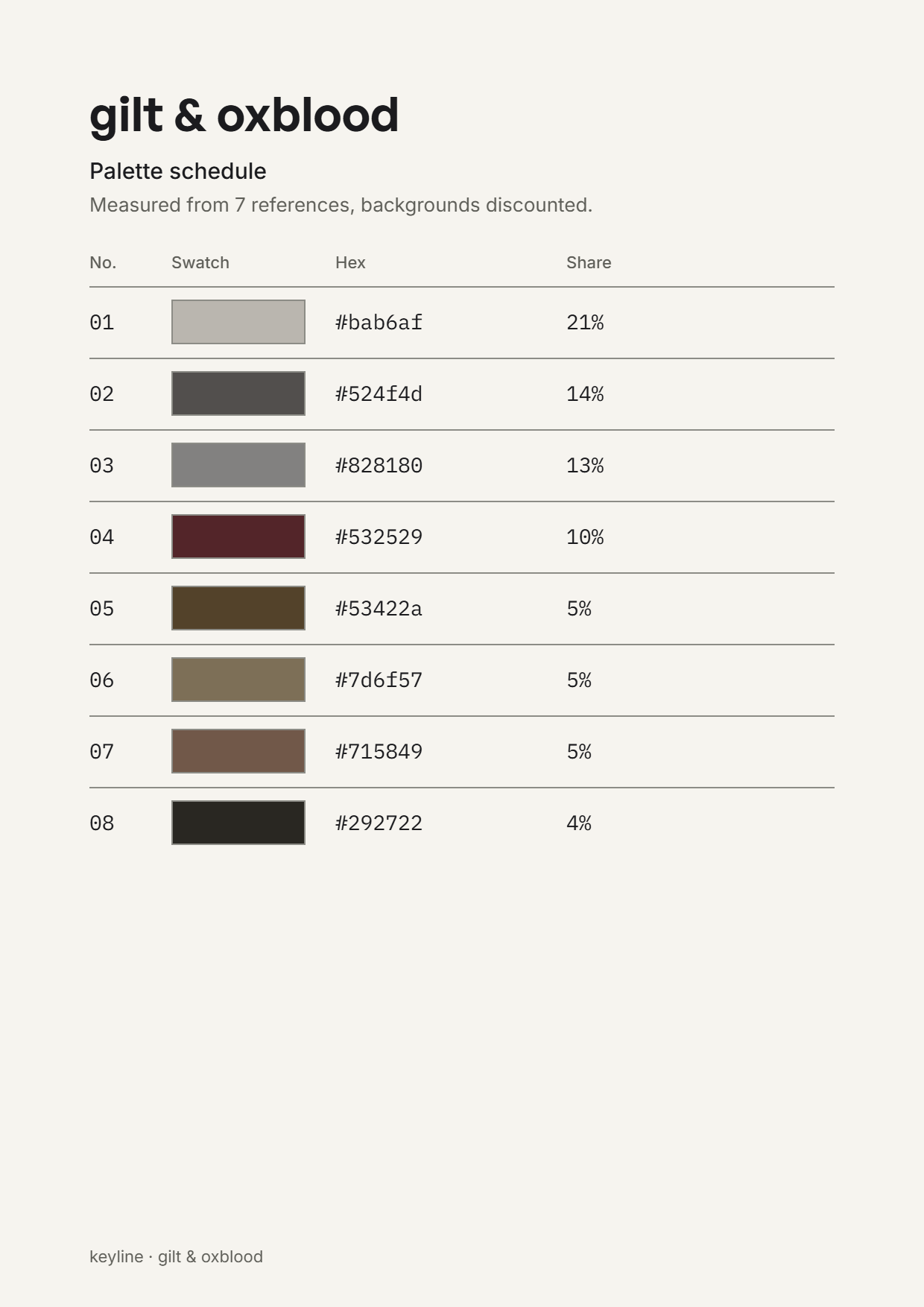
Eight colours with real weights, read from your pixels: hex and percentage, not vibes.

Eight reading layers

Light, material, era, mood and more, each written from the references, unedited.

[SUBJECT]

The [SUBJECT] slot

One prompt, any noun. Swap the subject, keep the taste.

Per-model dialects

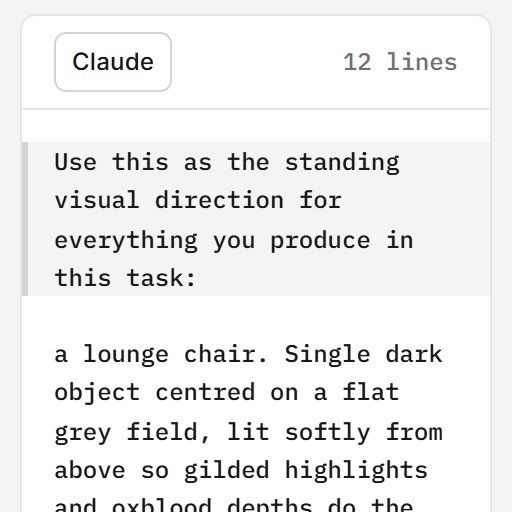
Prose for chat models, flags for image models. Compiled, not rewritten.

Three grounds

Paper, Aluminium, Graphite. The board re-inks correctly on each.

Deterministic layouts

Seeded variants of every board. Same seed, same layout, forever.

Contrast score

A measured reading of the board’s tonal spread. This board: 60/100.

Local by default

Boards live in your browser. Images leave once, for the AI reading you trigger.

The Ledger export

Watermark-free, print-resolution plates with the measured swatches on the keyline.

Restore by email

Your unlock follows your purchase email. New machine, same everything.

Twenty references

Per board, with roles: reference, palette, texture, and what to avoid.

Keyboard-first

Arrows cycle layouts, 1 2 3 swap grounds, G generates, ? lists all of it. Every destructive action undoes; nothing asks "are you sure".

That's all of it.

keyline is small on purpose. One person builds it, and every card above is live today.

Free to try on unlimited boards. One payment owns it.

Say it once.

Image models draw anything in seconds and forget what you meant. So you end up describing the same taste again and again.

you keep typing:

  • "less minimalist"
  • "more like image 4"
  • "not that warm"
  • "keep the material"
  • "no, warmer than that"

switch models re-upload every reference rewrite the prompt start again.

Your taste, written down.

keyline doesn't make images. It measures the references you love and writes one direction you paste into ChatGPT, Claude, Midjourney or any model. Switch models, keep the direction.

References

Start from what you already love.

The images are the brief. keyline composes them into a board the moment they land.

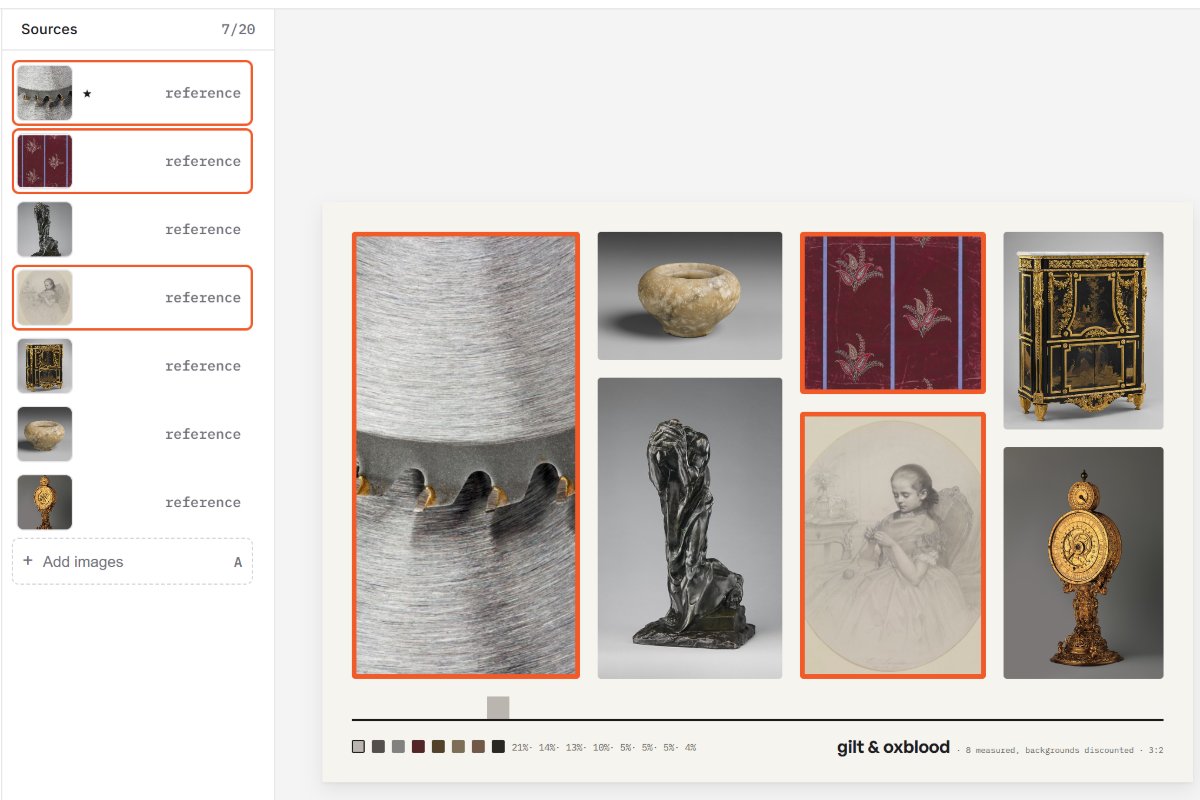
  • Up to 20 references in Sources. Drop images; the engine composes the board. No dragging pixels.
  • Mark the lead. ★ sets the dominant image; roles weight the rest: reference, palette, texture, avoid.
  • Seeded layouts, cycled with the arrow keys. Every recompose is deterministic: same seed, same board, forever.
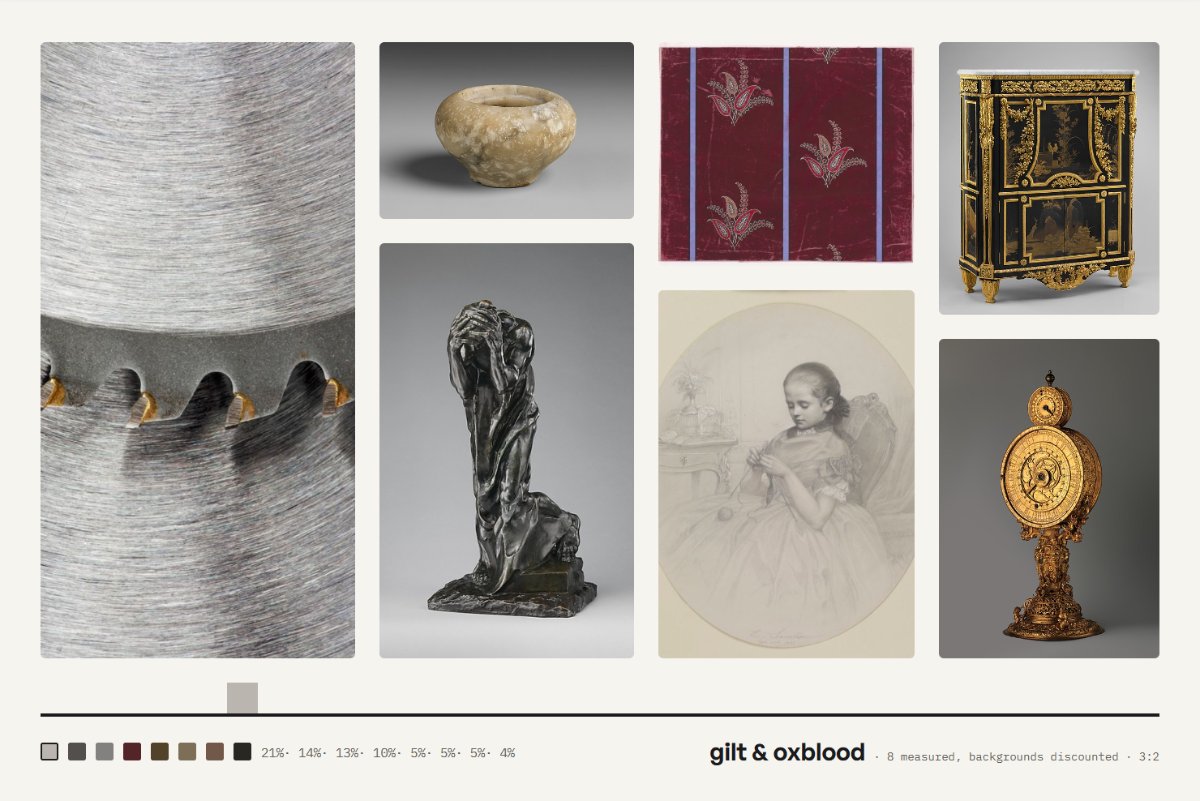
A real screenshot, cropped: the Sources shelf with seven references (the lead marked with a star) beside the composed board on the Graphite ground, its keyline ledger and measured swatches along the bottom

Measurement

keyline reads what you can't describe.

Real numbers from the pixels, then eight readings from the images. Nothing invented.

  • Eight colours, weighted. Measured from your pixels: hex and percentage, not vibes.
  • A contrast score. This board: 60/100.
  • Eight reading layers. Light, material, era, mood. Each one written from the references, unedited.
  • A thesis. One paragraph naming the direction.
A real screenshot, cropped: the direction panel mid-read. The header says reading with a Cancel key, the mark-building loader ticks beside an elapsed counter, the measured palette and its eight hexes sit below, and skeleton rows hold the place of the eight readings to come

Compiled output

Take the direction to any model.

One direction, compiled. Not a description you rewrite per tool.

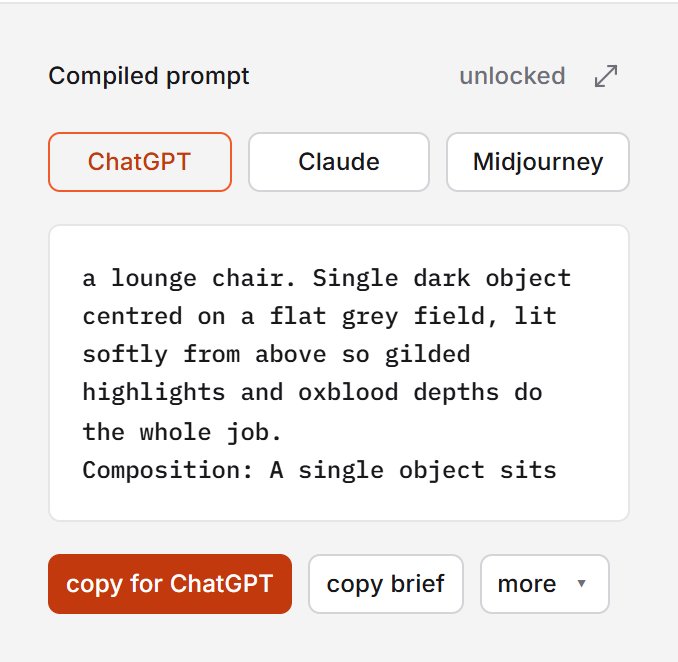
  • One prompt with a [SUBJECT] slot. Swap the noun, keep the taste.
  • Dialects per model. compiles for ChatGPT · Claude · Midjourney · any image model.
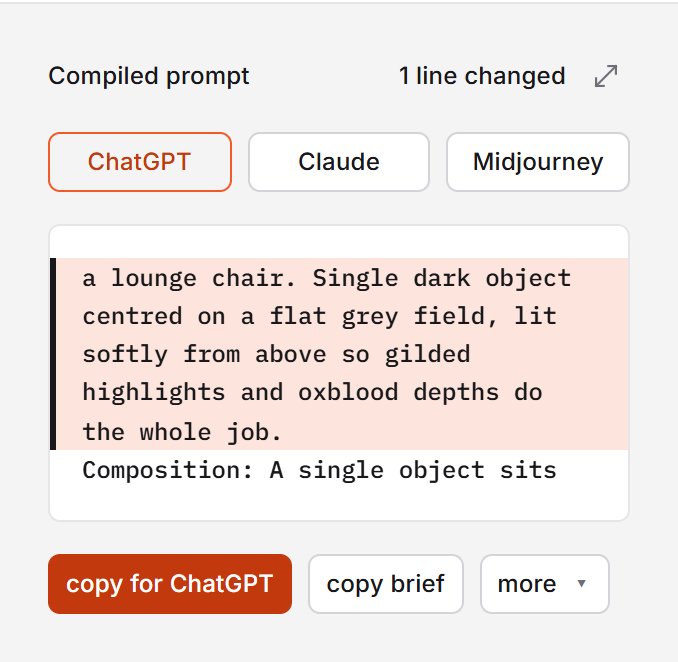
  • It stays on screen. The compiled prompt has its own zone at the foot of the panel for the whole session. Free shows its first lines; $29 removes the clamp.
  • Copy it. The button on this card works. This is the real compiled text.
keyline / direction · gilt & oxblood1:1 · 8 colours · 2026-08
[SUBJECT], shot as a museum catalogue plate: centred and frontal at a slight three-quarter turn against a seamless cool grey sweep that darkens toward the top, wide even margins, one soft cast shadow anchoring the base; palette restricted to mid grey #b3b3b3 through charcoal #4d4d4d with matte gilt bronze and deep oxblood #4d1a1a as the only saturated accents, plus alabaster cream and a single cool periwinkle note; broad diffuse light from high front-left rakes across the surface, long rolled highlights on metal, no pinpoint specular, no coloured fill; form a stable symmetrical mass with generous hand-softened radii and chamfered corners, carrying dense applied ornament, garlands, beading and fine engraved linework at fingertip scale; finish alternates high specular gilt and black lacquer against dry powdery stone, crushed velvet pile with pressure creases and finely grained brushed steel, tool marks and wear left visible.
compiles for ChatGPT · Claude · Midjourney · any image model

gilt & oxblood · composed by the engine · palette measured · unedited

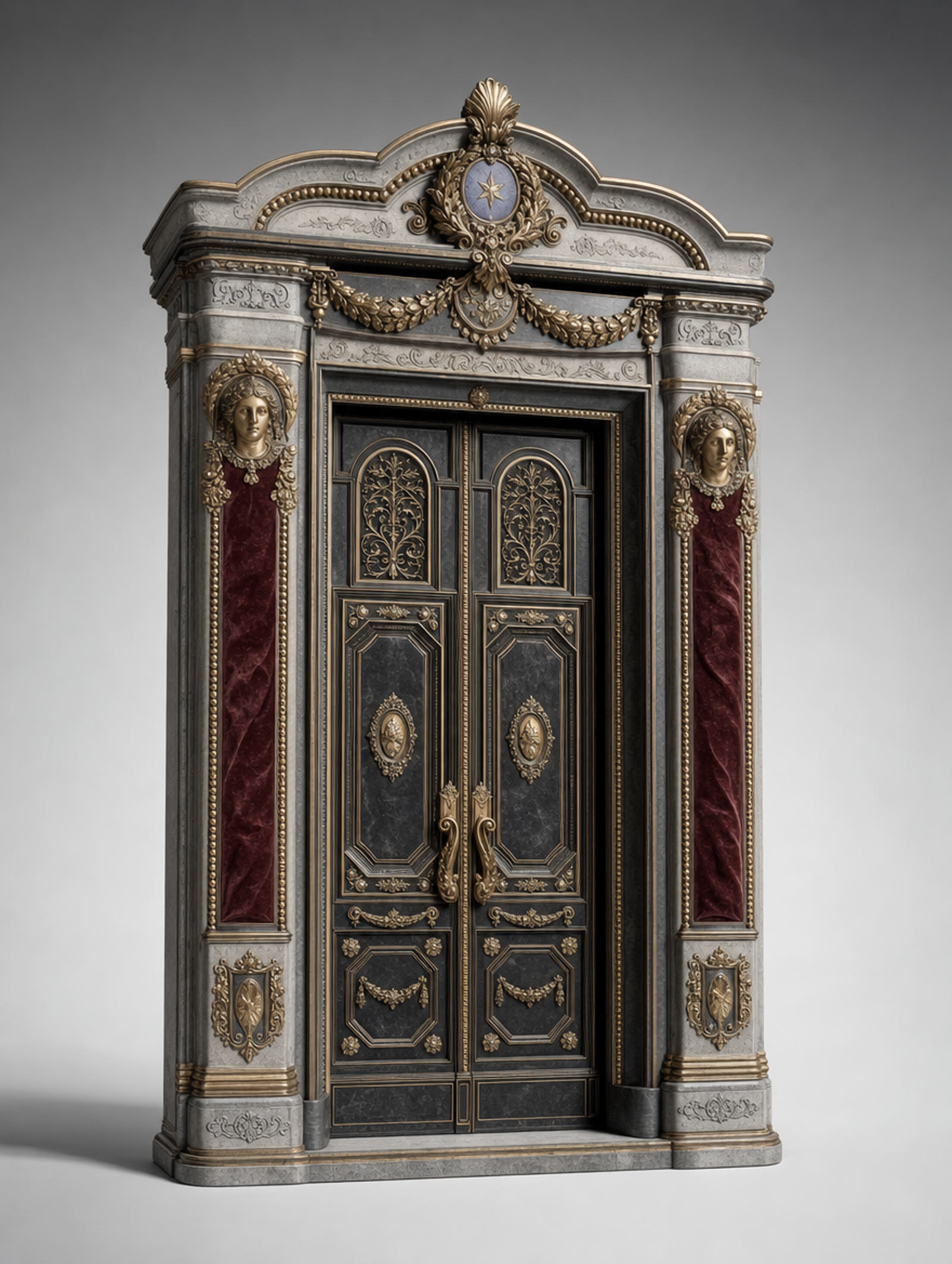
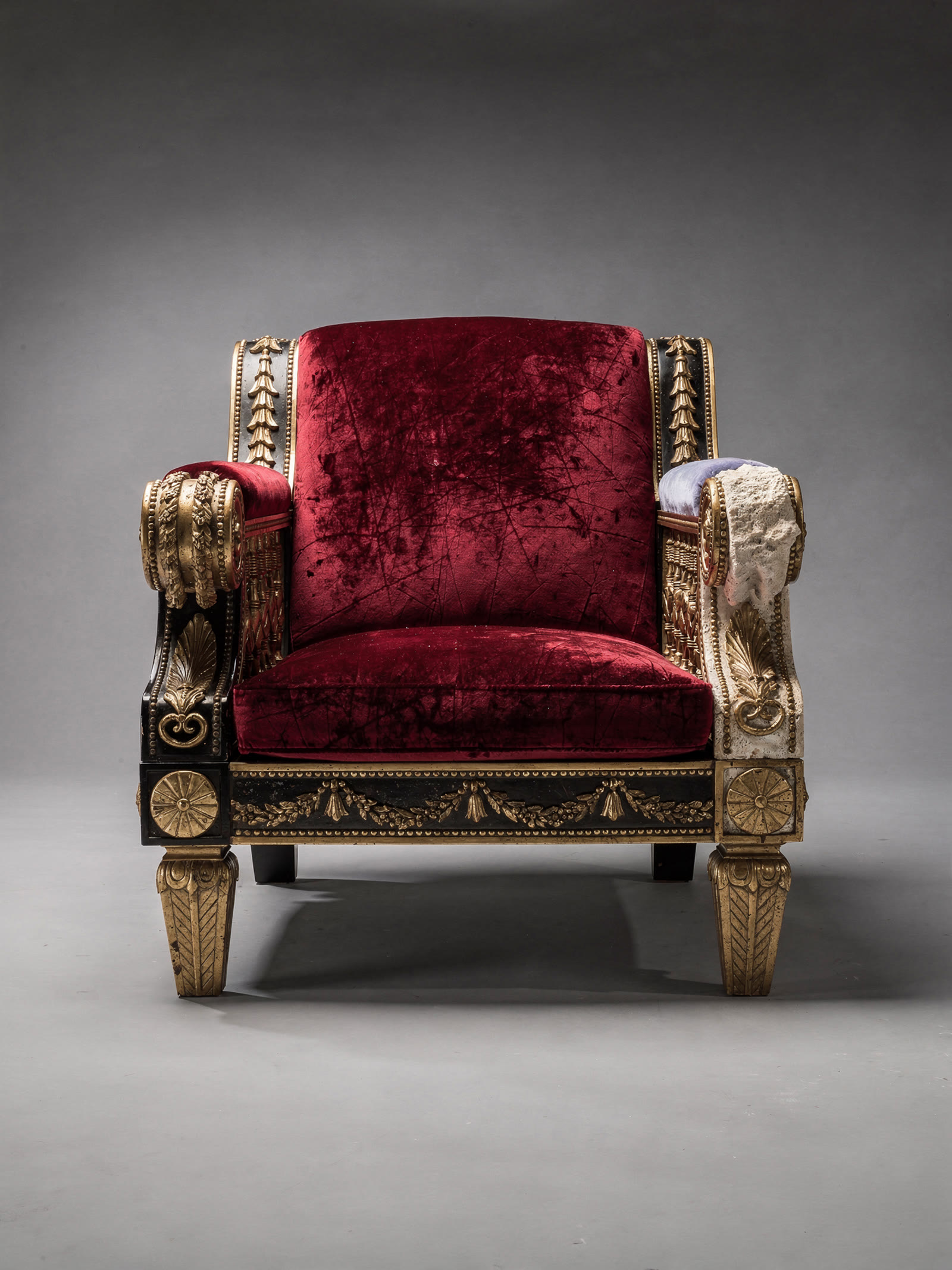
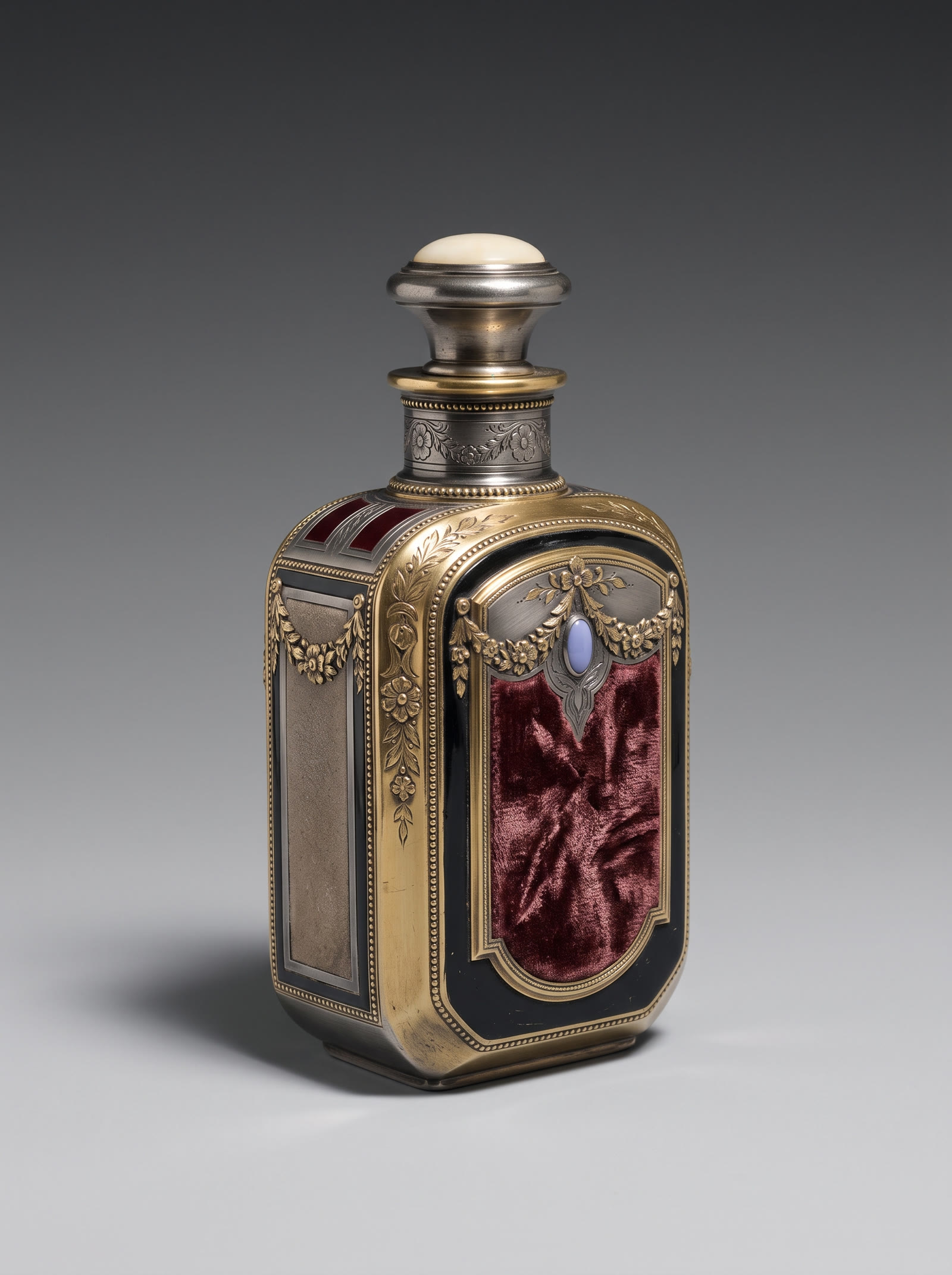
One direction. A doorway. A chair. A bottle.

One identical prompt into three models. Only the [SUBJECT] word changed. Watch the direction's "single cool periwinkle note" surface in all three.

GPT Image 2 output for the subject a doorway: an ornate stone doorway with black lacquer doors, gilt garlands, oxblood velvet panels and a periwinkle cartouche, on a grey studio sweep
“a doorway” · GPT Image 2OpenAI
FLUX.2 output for the subject a lounge chair: a black lacquer and gilt armchair in crushed oxblood velvet with one stone arm and a periwinkle drape, on the same grey sweep
“a lounge chair” · FLUX.2 maxBlack Forest Labs
Nano Banana output for the subject a perfume bottle: a silver and gilt flask with an oxblood velvet panel, beading, an alabaster stopper and a periwinkle cabochon, on the same grey sweep
“a perfume bottle” · Nano BananaGoogle

The direction transferred. The subject didn’t matter.

Generated 2026-08 from the compiled direction on this page: one identical prompt into each model, only the [SUBJECT] word changed. Outputs unedited; job records in the repo.

Whatever you design.

Pin down the feel of a space. Then render it anywhere.

“Lime-plaster warmth held flat and square, punctuated by one terracotta note and one matte black object.”

— the direction keyline generated from this board, unedited

Real board on the Paper ground: composed by the engine, palette measured. References: six references generated for keyline’s own interior film.

Image credits
  • interior/01.jpg · living room · keyline (generated reference, 2026-09) · Generated for keyline (owner-made, no third-party rights)
  • interior/02.jpg · shelf · keyline (generated reference, 2026-09) · Generated for keyline (owner-made, no third-party rights)
  • interior/03.jpg · kitchen · keyline (generated reference, 2026-09) · Generated for keyline (owner-made, no third-party rights)
  • interior/04.jpg · bedroom · keyline (generated reference, 2026-09) · Generated for keyline (owner-made, no third-party rights)
  • interior/05.jpg · materials · keyline (generated reference, 2026-09) · Generated for keyline (owner-made, no third-party rights)
  • interior/06.jpg · hallway · keyline (generated reference, 2026-09) · Generated for keyline (owner-made, no third-party rights)

Precedent studies in. A direction a model can follow, out.

“Monolithic stone and concrete masses read as flat planes under open sky, with light cut into them as sharp geometric incisions.”

— the direction keyline generated from this board, unedited

Real board on the Paper ground: composed by the engine, palette measured. References: Ando, Mies, Kahn and Zumthor, photographed by Wikimedia Commons contributors (CC BY, public domain).

Image credits
  • architecture/01.jpg · Church of the Light, Ibaraki (Tadao Ando) · 荻野目さん · CC BY 2.0 (Wikimedia Commons) · source
  • architecture/02.jpg · The Barcelona Pavilion (Mies van der Rohe), 2010 · Ashley Pomeroy at English Wikipedia · CC BY 3.0 (Wikimedia Commons) · source
  • architecture/03.jpg · The Barcelona Pavilion (Mies van der Rohe) · thierrytutin · CC BY 2.0 (Wikimedia Commons) · source
  • architecture/04.jpg · Salk Institute, La Jolla, California (Louis Kahn) · Carol M. Highsmith · Public domain (Wikimedia Commons) · source
  • architecture/05.jpg · Therme Vals (Peter Zumthor) · fcamusd · CC BY 2.0 (Wikimedia Commons) · source

One CMF direction, from moodboard to every render.

“Glossy white objects photographed close on warm wood and leather, lit by soft daylight, with a single orange accent doing all the colour work.”

— the direction keyline generated from this board, unedited

Real board on the Graphite ground: composed by the engine, palette measured. References: Apple objects photographed by Wikimedia Commons contributors (CC0, CC BY).

Image credits
  • product/01.jpg · Apple mouse and keyboard · Grovemade grovemade · CC0 (Wikimedia Commons) · source
  • product/02.jpg · HomePod mini, 2024 · Seasider53 · CC BY 4.0 (Wikimedia Commons) · source
  • product/03.jpg · Apple Pencil 2 · ajay_suresh · CC BY 2.0 (Wikimedia Commons) · source
  • product/04.jpg · AirPods · LWYang from USA · CC BY 2.0 (Wikimedia Commons) · source
  • product/05.jpg · Apple Watch · fancycrave1 · CC0 (Wikimedia Commons) · source

Hand-made taste, in a language machines can follow.

“Flat spot-colour printmaking: bold silhouettes, stacked display type, and visible ink texture on paper.”

— the direction keyline generated from this board, unedited

Real board on the Aluminium ground: composed by the engine, palette measured. References: posters and prints from Wikimedia Commons and Openverse contributors (public domain, CC BY).

Image credits
  • craft/01.jpg · Chicago World’s Fair, A Century of Progress, expo poster, 1933 · Weimer Pursell; silkscreen print by Neely Printing Co., Chicago · Public domain (Wikimedia Commons) · source
  • craft/02.jpg · Haiti, Lafayette Theatre poster (WPA Federal Art Project) · Federal Theatre Project, Vera Bock · Public domain (Wikimedia Commons) · source
  • craft/03.jpg · The Whimsical Stylings of Klim and Kyle, poster 1 · Visions of Domino · CC BY 2.0 (Wikimedia Commons) · source
  • craft/04.jpg · Alphabets · kvanhorn · CC BY (Openverse, provider: flickr) · source
  • craft/05.jpg · Detail: “Beach Toys”, a risograph print · Joe Crawford (artlung) · CC BY (Openverse, provider: flickr) · source

Pay once.

Not monthly, not per board, not per export.

Free
$0

Explore keyline. All of it, free.

  • Unlimited boards, 20 references each
  • Measured direction, free to read and tune
  • Watermarked export
keyline
$29once · yours forever

Own your directions, on every board you ever make.

  • Full compiled prompts, per model
  • All exports, clean, print resolution
  • Restore anytime by purchase email
  • Never again: one payment, every future board

STUDIO · IN THE WORKS

Next: your direction joins the conversation.

  • The keyline MCP: inside Claude, ChatGPT and CursorMid-conversation, your AI asks keyline for the direction and renders in it. No copy-paste, no drift.
  • Shared directionsRatified once, and the whole team renders with it.
  • Team librariesYour boards and references on every machine you sign into.

Studio will be a yearly tier. None of it is for sale until it exists. It ships when it's real, and it will be announced here and in the app's What's new first. Running a studio and want in early? hello@keyline.studio

Questions.

What exactly does $29 buy?

Everything, forever: the compiled prompt with per-model copies, the Markdown brief, and watermark-free print-resolution exports, on this board and every board you ever make. One payment. It is not a subscription and not a per-export fee.

Do you store my images?

No. Boards live in your browser's own storage. Your references leave your machine only in one case: the images are sent once to the AI for the reading when you press Generate.

Couldn't I just upload my images to ChatGPT?

A vision model will describe your pictures. keyline measures what they have in common: real hexes and weights from the pixels, eight traceable layers, and a compiled prompt with a [SUBJECT] slot that stays reusable. The three-model proof above is the difference in practice.

What if I clear my browser or switch machines?

Your unlock is restored by the email you purchased with, from Settings › License in the app: a code sent to your inbox proves it and turns everything back on. Boards themselves are local; export the brief for anything you can't lose.

Are the boards and outputs on this page real?

Yes. The boards are composed by the same engine and measured by the same code as yours. The references are open-licence photographs (Met Open Access, Wikimedia Commons and Openverse contributors; CC0, CC BY or public domain, credited per image under each board) and, for the interior board, six references generated for keyline’s own film. The direction and the three model outputs are unedited, generated 2026-08 from one identical prompt.

Your references already know what you like.

$29 once unlocks everything, forever. Not monthly, not per board, not per export.